MCAT Biology Section: Bio/Biochem Topics, Format & Strategies
Your comprehensive guide to the MCAT biology and biochemistry section — 59 questions, 95 minutes, and the most biology-intensive part of the entire MCAT exam.
What to Expect on the MCAT Biology Section
The Biological and Biochemical Foundations of Living Systems section is the third section you will encounter on test day, appearing after the midday break.
Format & Timing
You have 95 minutes to answer 59 questions, giving you roughly 1 minute and 36 seconds per question. Approximately 44 questions are tied to passages describing experiments, clinical scenarios, or research findings. The remaining 15 are discrete questions that test fundamental knowledge without a passage context.
Scoring & Content
This section is scored on a scale of 118 to 132, with 125 representing the midpoint. It draws from AAMC Foundational Concepts 1, 2, and 3. Every question is multiple-choice with four answer options.
MCAT Biology Topics: Core Subjects Tested in Bio/Biochem
The AAMC draws from a wide range of biological and chemical disciplines. Here are the major content areas you must prepare for.
Cell Biology
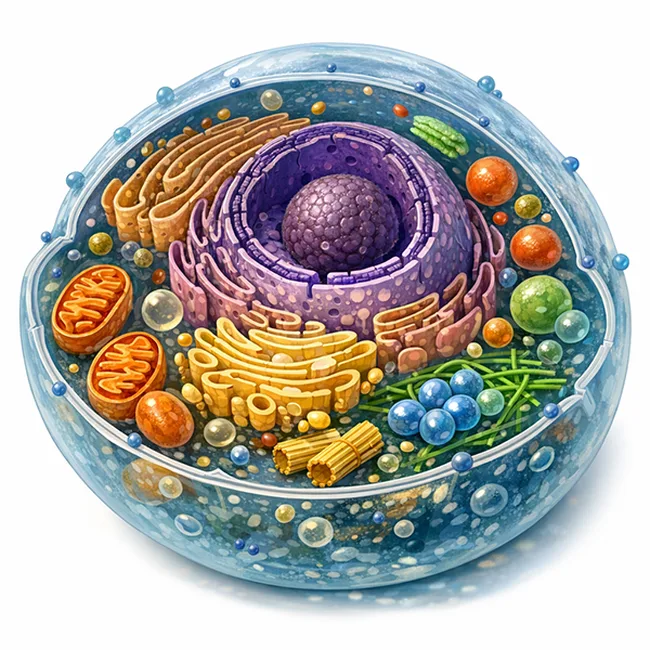
Cell structure and organelles, membrane transport, cell signaling pathways, the cell cycle, mitosis and meiosis, apoptosis, and cellular compartmentalization. You must understand how cells maintain homeostasis and respond to their environment.
Molecular Biology & Genetics
DNA replication, transcription, translation, gene regulation, mutations, recombinant DNA technology, and inheritance patterns. Expect passages describing genetic experiments or molecular techniques such as PCR and gel electrophoresis.
Biochemistry
Amino acid structure and properties, protein folding, enzyme kinetics (Michaelis-Menten), metabolic pathways (glycolysis, TCA cycle, oxidative phosphorylation, gluconeogenesis, fatty acid metabolism), and bioenergetics. This is the single most heavily weighted topic area.
Organ System Physiology
Cardiovascular, respiratory, renal, digestive, endocrine, nervous, reproductive, musculoskeletal, and immune systems. Questions typically require you to connect molecular-level knowledge to organ-level function and clinical scenarios.
Microbiology & Evolution
Viral structure and replication, bacterial genetics, natural selection, population genetics, Hardy-Weinberg equilibrium, and speciation. Expect questions that connect evolutionary principles to molecular and organismal biology.
Organic & General Chemistry
Although primarily a biology section, approximately 25% of questions involve chemistry concepts — particularly as they apply to biological molecules. Topics include functional groups, acid-base chemistry, thermodynamics, and reaction mechanisms in a biological context.
Organ Systems & Biochemical Metabolism
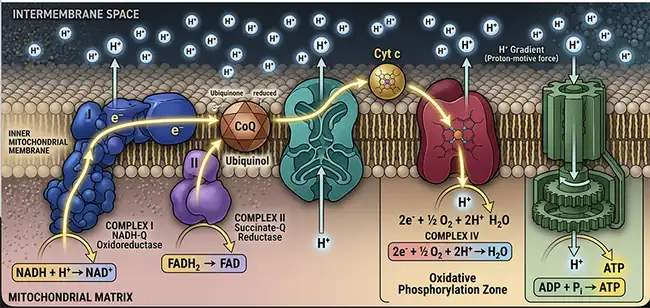
Two topic clusters consistently dominate this section: organ system physiology and biochemical metabolism. Together, they account for the majority of passage-based questions you will encounter.
Organ System Physiology
The MCAT expects you to understand not just how each system functions in isolation, but how systems interact — for example, how the endocrine system regulates renal function, or how the cardiovascular and respiratory systems coordinate gas exchange.
Biochemical Metabolism
You need a working command of the major catabolic and anabolic pathways, including the regulation points, key enzymes, energy yields, and the connections between pathways. Passages often present experimental data about metabolic disorders or enzyme inhibitors and ask you to predict physiological consequences.
How to Prepare for the MCAT Bio/Biochem Section
Effective preparation requires more than reading textbook chapters. Here are proven approaches that Dr. Donnelly uses with his students.
Build Concept Maps, Not Flash Cards
The Bio/Biochem section rewards connected thinking. Rather than memorizing isolated facts, create visual maps that link related concepts — for example, connecting amino acid chemistry to protein structure to enzyme function to metabolic regulation. This mirrors how MCAT passages test you: by requiring you to traverse multiple layers of knowledge in a single question set.
Practice Data Interpretation Daily
Bio/Biochem passages are data-heavy. They frequently include graphs, tables, experimental protocols, and results that you must interpret quickly. Set aside time each day to work through AAMC practice passages, focusing specifically on extracting conclusions from unfamiliar data sets rather than relying on prior content knowledge alone.
How Dr. Donnelly Helps You Conquer Bio/Biochem
With a Ph.D. in biological sciences from Oxford, Dr. Donnelly brings genuine subject-matter expertise to every tutoring session — not just test-prep shortcuts.
Diagnostic Deep-Dive
Stuart begins by identifying which biological and biochemical topics are costing you the most points. Many students assume they are weak in biochemistry when their real gap is in experimental design interpretation — an entirely different skill that requires different practice.
Passage Deconstruction Drills
Dr. Donnelly walks you through his proprietary method for rapidly identifying the key variables, controls, and conclusions in biology passages — a technique that dramatically reduces the time you spend re-reading and second-guessing.
Iterative Reinforcement
After each session, Stuart assigns targeted practice sets and reviews your performance in the next meeting. This spaced-repetition loop ensures that new skills are reinforced before they fade and that weak areas are addressed systematically.
Struggling with the Bio/Biochem Section?
Dr. Donnelly's Oxford-level expertise in the biological sciences makes him uniquely qualified to help you master the most content-heavy section of the MCAT. Schedule a free consultation today.