
MCAT Psychology & Sociology Section: Psych/Soc Topics & Strategies
Your complete guide to the MCAT psychology sociology section. It is the MCAT's most underestimated challenge — and the section where smart preparation pays off most.
Psychological, Social & Biological Foundations of Behavior
The Psych/Soc section tests how well you understand the ways psychological, social and cultural, and biological factors shape human perception, behavior, and health.
59 Questions in 95 Minutes

This is the fourth and final scored section of the MCAT. It presents 59 multiple-choice questions in 95 minutes. About 44 questions are passage-based, drawn from 10 passages. The remaining 15 are standalone (discrete) questions.
Passages describe psychological experiments, sociology studies, or public health scenarios. You will need to interpret research findings and spot confounding variables. You will also evaluate study designs and apply theories to new situations.
Why it matters: Many students treat Psych/Soc as an afterthought. They assume it is "easier" than the science sections. In reality, the huge number of terms and the subtle differences between related concepts make it surprisingly difficult. Well-prepared students can use this section to pull ahead.
Why Psych/Soc Trips Up So Many Test-Takers
Students who underperform on this section typically fall into the same traps. Understanding these pitfalls is the first step toward avoiding them.
Massive Vocabulary Load
The AAMC content outline includes hundreds of terms from psychology and sociology. Many have precise definitions that differ from everyday usage. Confusing "negative reinforcement" with "punishment" — or "correlation" with "causation" — can cost you multiple points.
Overlapping Theories
Several psychological theories address similar topics from different angles. For example, you must distinguish Piaget's cognitive development stages from Vygotsky's social and cultural theory. It is not enough to know each one alone. You need to understand how and where they diverge.
Research Design Questions
Many questions ask you to evaluate how studies are designed. You will need to:
- Identify independent and dependent variables
- Recognize selection bias
- Understand within-subjects vs. between-subjects designs
- Interpret statistical significance in context
MCAT Psych/Soc Section: Core Disciplines & Key Topic Areas
The Psych/Soc section draws from three foundational areas, each contributing to the 59 questions you will face.
Psychology (~65%)
Key topics include:
- Sensation and perception
- Learning and memory
- Cognition and consciousness
- Emotion, stress, and motivation
- Personality and psychological disorders
You will encounter major theories such as behaviorism, cognitive psychology, humanistic, and psychodynamic. You must understand how they apply to health and behavior.
Sociology (~30%)
Key topics include:
- Social stratification and inequality
- Culture and demographics
- Social institutions and group dynamics
- Deviance
The MCAT tests sociology through the lens of health disparities, access to care, and social factors that affect health. These topics are increasingly important in medical education.
Biology of Behavior (~5%)
Key topics include:
- Neuroanatomy and neurotransmitter systems
- The endocrine system's role in behavior
- Genetics of behavior
- The physical basis of emotions and stress responses
This area bridges the gap between the natural sciences and the behavioral sciences on the MCAT.
Research Methods & Statistics
Key topics include:
- Experimental design and observational studies
- Survey methods, reliability, and validity
- Basic statistics: mean, median, standard deviation, p-values
- Ethical considerations in research
These skills are tested throughout the passages rather than as a separate content area.
The Three Foundational Concepts

The AAMC structures the Psych/Soc section around three overarching ideas:
- Concept 6 — Biological underpinnings: How biological, psychological, and social and cultural factors shape the way we perceive, think about, and react to the world. Topics include sensory processing, attention, language, memory, and emotion.
- Concept 7 — Behavior & behavior change: How individual and group behaviors are shaped by biological, psychological, and social and cultural factors. Topics include classical and operant conditioning, observational learning, attitudes, group processes, and identity formation.
- Concept 8 — Self & social interaction: How self-identity, social structures, and cultural contexts shape our view of the world and how we interact with others. Topics include self-concept, social cognition, stereotyping, prejudice, discrimination, and health disparities.
Study Strategies for the MCAT Psychology Sociology Section
A targeted approach can turn this section from a weak spot into one of your strongest areas. These are the methods Dr. Donnelly uses with his students.
Organize Terminology into Thematic Groups
Do not memorize an alphabetical list of 300 terms. Instead, group related concepts together. For example, cluster all learning theories: classical conditioning, operant conditioning, observational learning, and latent learning. Compare and contrast them side by side. This makes it much easier to tell apart similar-sounding answer choices on test day.
Learn the Classic Experiments
The MCAT often references landmark studies such as Milgram (obedience), Zimbardo (prison study), Harlow (attachment), and Asch (conformity). For each one, learn the method, the findings, and the limitations. This knowledge gives you a clear advantage when interpreting passages.
Connect Everything to Health & Medicine
The MCAT tests behavioral science through a medical lens. When you study a concept like "socioeconomic status," ask yourself: how does this affect access to healthcare? What about disease rates, treatment adherence, or health outcomes? This applied mindset mirrors how MCAT questions are written.
Practice Eliminating Distractor Answers
Psych/Soc answer choices are designed to exploit imprecise understanding. Two options often look nearly identical. Then you notice one key word that changes the meaning entirely. Train yourself to spot these differences. Do plenty of practice questions and review every answer thoroughly.
How Dr. Donnelly Helps You Conquer Psych/Soc
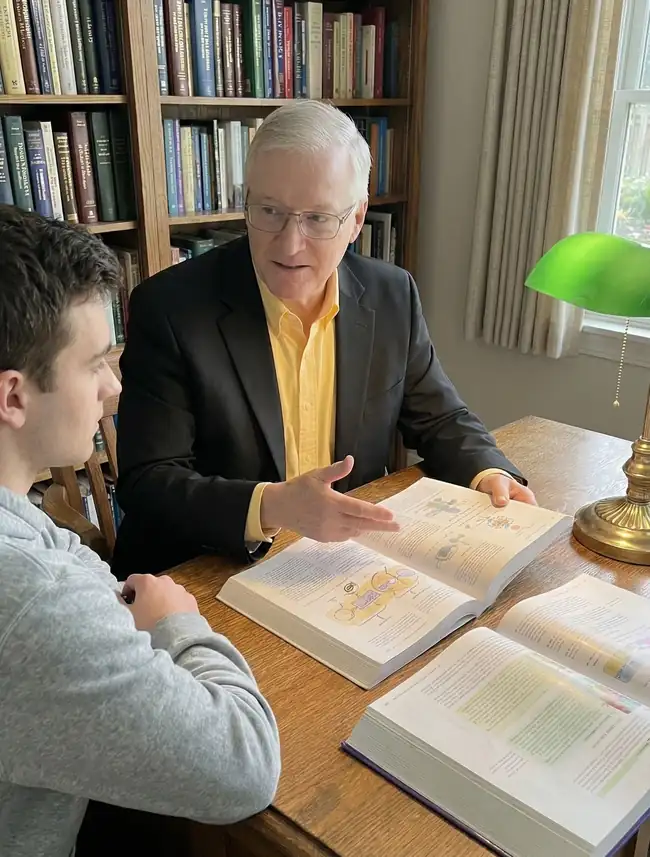
With over twenty years of private MCAT tutoring experience, Dr. Donnelly has developed highly effective methods for this uniquely challenging section.
Book A Free ConsultationTargeted Content Review
Stuart finds your weak spots among the hundreds of Psych/Soc topics. He then focuses your review time there. High-yield terms and theories that appear most often on the MCAT get priority attention.
Passage Reasoning Training
Psych/Soc passages describe real research scenarios. Dr. Donnelly teaches you to quickly identify the study design and locate the key findings. You will learn to connect the data to the theory being tested. These skills translate directly to higher scores.
Score Maximization
Many students neglect Psych/Soc. That means gains here are often the fastest way to raise your total MCAT score. Stuart helps you take advantage of this through focused, efficient preparation.
Ready to Raise Your Psych/Soc Score?
Book a free 30-minute consultation with Dr. Donnelly. He will find your content gaps and build a targeted study plan. Get the strategies that turn Psych/Soc into a competitive strength.