
MCAT Exam Content: What Subjects Are on the MCAT?
A thorough breakdown of every MCAT subject, skill, and question type across all four scored sections of the MCAT exam.
MCAT Exam Content: More Than Memorization
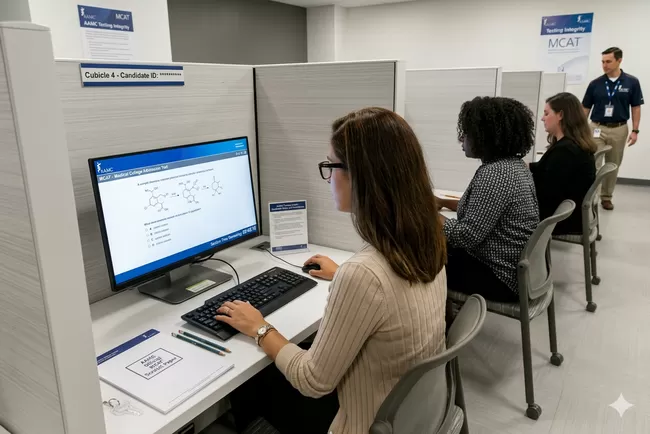
The MCAT does not simply quiz you on isolated facts. The AAMC designed this exam to measure two things: your knowledge of foundational concepts in the natural and social sciences, and your ability to apply scientific reasoning and critical analysis skills under timed conditions.
Most questions are built around passages. These are short excerpts from research studies, experiments, or scholarly arguments. You must interpret data, evaluate hypotheses, and combine knowledge from different subjects. A smaller number of standalone (discrete) questions test core knowledge directly.
Passage-Based vs. Discrete Questions
How questions are delivered matters as much as the content itself. The MCAT uses two main formats across its science sections.
Passage-Based Questions
Each passage is 300–600 words long. It presents an experiment, a set of research findings, or a theoretical discussion. You then answer 4–7 multiple-choice questions based on the passage. These require you to analyze the text, apply outside knowledge, and draw logical conclusions. About 75–80% of science section questions use this format.
Discrete (Standalone) Questions
These freestanding questions appear on their own, without a passage. They test your recall of key principles, your ability to do quick calculations, or your understanding of a single concept. About 20–25% of each science section's questions are standalone. CARS, by contrast, is entirely passage-based with no standalone questions.
The Four MCAT Sections: A Complete Breakdown
Here is a detailed look at the subjects, topics, and skills tested in each of the four scored MCAT sections.
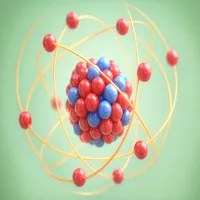
Chemical & Physical Foundations of Biological Systems
59 questions | 95 minutes | Score: 118–132
This section tests how chemical and physical processes support biological systems. It is heavily tested on the MCAT, and medical school admissions committees pay close attention to this score. The section includes:
- General chemistry — atomic structure, bonding, thermodynamics, kinetics, equilibrium, acids and bases, electrochemistry
- Organic chemistry — functional groups, reaction mechanisms, stereochemistry, spectroscopy
- Physics — mechanics, fluids, electrostatics, circuits, optics, waves
- Introductory biochemistry — amino acids, protein structure, enzyme kinetics
The AAMC organizes this section around Foundational Concepts 4 and 5. These focus on physical principles in living systems and the chemical interactions that sustain life.
Full Chem/Phys Guide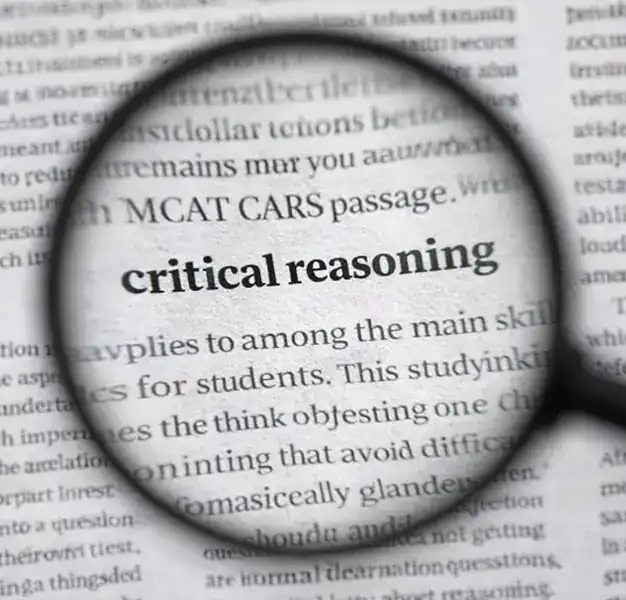
Critical Analysis & Reasoning Skills (CARS)
53 questions | 90 minutes | Score: 118–132
CARS is entirely passage-based. Passages come from the humanities, philosophy, ethics, cultural studies, and social sciences. No science knowledge is needed. Instead, this section tests your reading comprehension at an advanced level — you must understand complex arguments, spot unstated assumptions, judge the strength of evidence, and apply an author’s reasoning to new situations.
Questions fall into three skill categories:
- Foundations of Comprehension — understanding what is directly stated
- Reasoning Within the Text — making inferences from the passage
- Reasoning Beyond the Text — applying ideas to new contexts
Biological & Biochemical Foundations of Living Systems
59 questions | 95 minutes | Score: 118–132
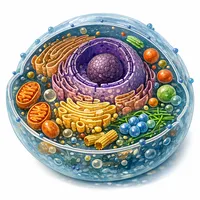
This is the most biology-heavy section on the exam and is critical for medical school admissions. The section includes cell biology, molecular biology, genetics, evolution, and organ system physiology. You will also see biochemistry (enzyme regulation, metabolic pathways, bioenergetics) and some organic and general chemistry tied to biological processes.
The AAMC maps this section to Foundational Concepts 1, 2, and 3. These cover biomolecules, cellular processes, organ systems, and genetic information.
Full Bio/Biochem Guide
Psychological, Social & Biological Foundations of Behavior
59 questions | 90 minutes | Score: 118–132
The newest MCAT section explores how psychological, social, and biological factors shape perception, behavior, and health. Medical school programs increasingly value this section because it reflects the social and behavioral dimensions of patient care. The section includes:
- Psychology — cognition, learning, memory, motivation, emotion, development, personality, psychological disorders
- Sociology — social stratification, institutions, demographics, inequality
- Biology — the nervous system, endocrine system, and their effects on behavior
Content is organized under Foundational Concepts 6, 7, 8, 9, and 10. These span everything from sensory processing to social determinants of health.
Full Psych/Soc GuideFoundational Concepts & Scientific Inquiry Skills
The AAMC organizes the MCAT around 10 Foundational Concepts and 4 Scientific Inquiry and Reasoning Skills. Knowing this framework helps you study smarter.
10 Foundational Concepts
These are the broad content themes the AAMC expects you to master. Concepts 1–3 map to Bio/Biochem, 4–5 to Chem/Phys, and 6–10 to Psych/Soc. Each concept breaks down into content categories and specific topic lists. Together, they form your study blueprint.
4 Scientific Inquiry & Reasoning Skills
Every MCAT question also targets one of four skill levels:
- Skill 1 — Knowledge of scientific principles
- Skill 2 — Scientific reasoning and problem-solving
- Skill 3 — Reasoning about research design and execution
- Skill 4 — Data-based and statistical reasoning
Skills 1 and 2 make up the majority of questions.
How Dr. Donnelly Approaches MCAT Content Mastery
Knowing what is tested is the first step. Knowing how to study it efficiently is what separates average scores from outstanding ones.
Targeted Gap Analysis
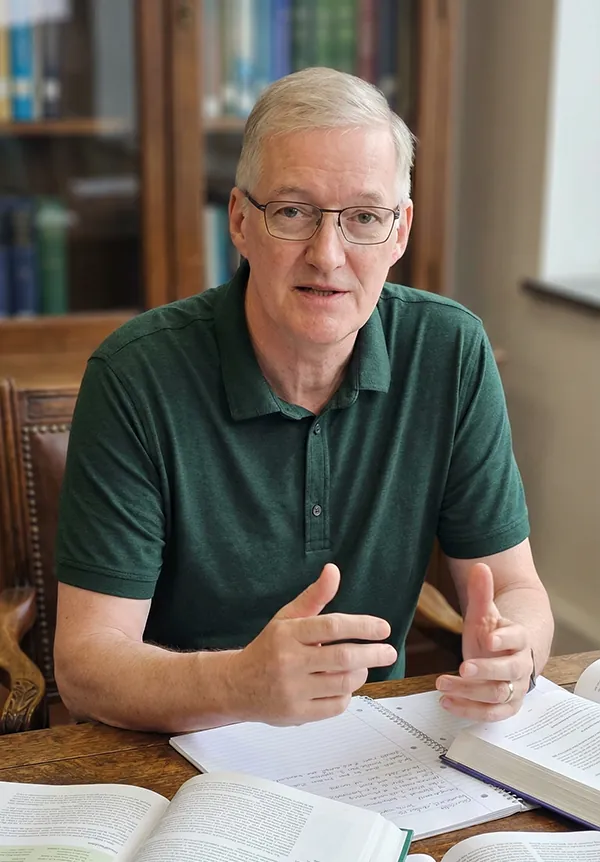
Dr. Donnelly begins every tutoring engagement with a diagnostic evaluation to pinpoint exactly which foundational concepts and skills you need to strengthen — so you never waste time reviewing material you already command.
Integrated Subject Practice
Because MCAT passages frequently blend multiple disciplines, Stuart trains you to think across subject boundaries — connecting biochemistry to cell biology, or physics to organ-system physiology — just as the exam demands.
Passage-First Methodology
Rather than drilling facts in isolation, Dr. Donnelly immerses you in passage-based practice from day one. This builds the analytical stamina and speed that the MCAT rewards far more than pure memorization.
Why MCAT Content Knowledge Matters for Medical School
The MCAT is not just a hurdle to clear. Medical school admissions committees use your MCAT score to predict how well you will handle the academic demands of the first two years of medical school, where foundational science courses dominate the curriculum.
Here is how each MCAT section connects to your future medical training:
Chem/Phys and Medical School
The chemistry and physics you learn for the MCAT appear again in pharmacology, radiology, and physiology courses. Understanding drug interactions, imaging technologies, and fluid dynamics in the body all build on the concepts tested in this section.
CARS and Clinical Reasoning
Medical school requires you to read dense research papers, interpret clinical guidelines, and evaluate conflicting evidence. The critical reading skills tested on CARS translate directly to these tasks. Many medical schools weigh the CARS score heavily for this reason.
Bio/Biochem and Preclinical Courses
Molecular biology, genetics, and biochemistry form the backbone of the first-year medical school curriculum. A strong Bio/Biochem score tells admissions committees you are ready for the volume and depth of science content ahead.
Psych/Soc and Patient Care
Modern medical education emphasizes the social determinants of health. The Psych/Soc section tests concepts you will apply when working with diverse patient populations, understanding health disparities, and communicating effectively as a physician.
Understanding why each MCAT section matters can help motivate your study and give you a clearer sense of what medical schools are looking for in your score report.
MCAT Exam Content FAQs
How many sections does the MCAT have?
What topics are on the MCAT?
Is the MCAT more about memorization or reasoning?
Which MCAT section is the hardest?
How should I start studying for the MCAT?
Want a Personalised MCAT Content Plan?
Book a free consultation with Dr. Donnelly. He will evaluate your strengths and weaknesses across all four sections and design a study roadmap tailored to your target score.