
MCAT Physical Chemistry Tutor: Chem/Phys Section Topics & Strategies
What's tested, how it's structured, and strategies to raise your score on MCAT chemistry and physics.
Chemical & Physical Foundations of Biological Systems
The Chem/Phys section asks you to apply ideas from physics and chemistry to real biological situations. This is the same type of thinking you will need in medicine.
59 Questions in 95 Minutes
This is the first scored section on MCAT test day. You get 95 minutes to answer 59 multiple-choice questions. That works out to about 1 minute and 36 seconds per question.
About 44 questions are passage-based, spread across 10 passages. The remaining 15 are standalone (discrete) questions that test your knowledge without an attached passage.
Each passage presents a research scenario, lab data, or clinical situation. You must apply physics, chemistry, and biochemistry concepts to answer 4 to 6 questions per passage.
Key fact: This is not a traditional chemistry or physics exam. The MCAT tests your ability to reason through scientific problems, not just recall formulas. Medical school admissions committees value this section because it mirrors the analytical thinking required in preclinical coursework. Practice problems that combine multiple concepts are the best way to prepare.
MCAT Chemistry Physics: Core Disciplines & Foundational Concepts
The section draws from four major subject areas, each contributing a defined percentage of the total questions.
General Chemistry (~30%)
Topics include:
- Atomic structure and periodic trends
- Bonding and stoichiometry
- Thermodynamics and kinetics
- Equilibrium, acids and bases
- Electrochemistry and solutions
You must apply these ideas to biological situations. For example, you might explain how buffers maintain blood pH or how Le Chatelier's principle affects oxygen binding in hemoglobin.
Organic Chemistry (~15%)
Topics include:
- Functional groups
- Reaction mechanisms
- Stereochemistry
- Separation techniques
The MCAT focuses on organic chemistry as it relates to biology. Expect questions on enzyme active sites, drug interactions, and amino acid behavior under body conditions.
Physics (~25%)
Topics include:
- Mechanics and fluids
- Electrostatics and circuits
- Light, optics, waves, and sound
Physics on the MCAT is always tied to biology. You may see questions on blood flow (Bernoulli's principle), nerve signals (circuits), or how imaging tools work.
Biochemistry (~25%)
Topics include:
- Amino acids and protein structure
- Enzyme kinetics
- Metabolism: glycolysis, Krebs cycle, oxidative phosphorylation
- Lipid and carbohydrate chemistry
Biochemistry connects the physical sciences to biology. It appears heavily in passage-based questions throughout this section.
Distribution note: About 5% of questions cover research design, data reading, and basic statistics. These skills are built into the science passages rather than tested on their own.
How Physics & Chemistry Are Tested in Biological Contexts
If you are used to simple textbook problems — plug in a formula, solve for x — the MCAT will surprise you. Passages describe experiments, show data tables, and include lab or body-system diagrams. Your job is to find the key principles, read the data, and reason through multi-step questions.
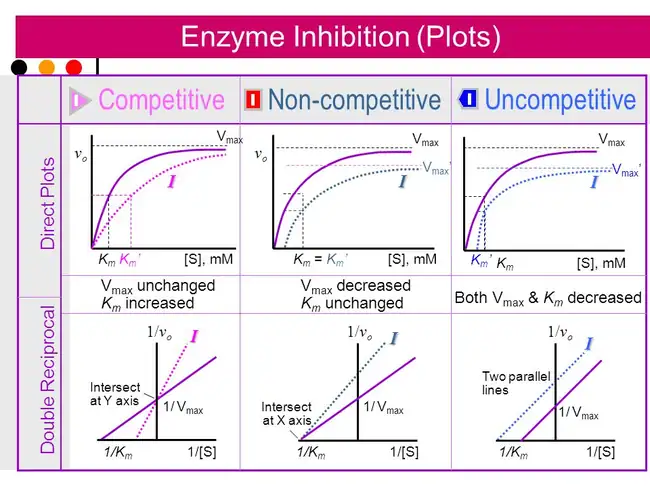
For example, a passage might describe an enzyme reaction measured at different temperatures. From one passage, you could be asked to read an Arrhenius plot, predict how an inhibitor would change the kinetics, or calculate the activation energy. All of this can come from a single set of 4 to 6 questions.
Standalone questions are more direct but still need clear thinking. You might rank the acidity of organic molecules or predict current flow in a galvanic cell.
The Foundational Concepts Behind Chem/Phys
The AAMC groups Chem/Phys content around key ideas that link the physical sciences to living systems.
Concept 4: Physical Principles
Covers motion, forces, energy, fluids, electrostatics, circuits, light, and sound. Every topic is viewed through the lens of living systems. You need to see how physical forces work at both the body-wide and molecular level.
Concept 5: Chemical Interactions
Covers chemical bonds, molecular properties, reaction types, thermodynamics, and kinetics in biological processes. Expect questions linking chemical equilibrium to body balance and reaction pathways to metabolism.
Molecular Properties & Separations
Covers acid-base chemistry, electrochemistry, intermolecular forces, separation methods, and molecular structure. You must understand how small-scale molecular traits lead to large-scale behavior. This skill matters on test day and in your medical career.
Study Strategies for the MCAT Chem/Phys Section
Scoring well on Chem/Phys demands more than memorization. Here are proven approaches that Dr. Donnelly teaches his students.
Build Conceptual Frameworks, Not Flashcard Stacks
Do not memorize equations in isolation. Build mental maps that connect related concepts. For example, link Ohm's law to blood flow resistance, or connect capacitor behavior to membrane potentials. When you grasp the logic, you can derive formulas under pressure instead of hoping you memorized the right one.
Practice Passage Deconstruction
Read each passage with a plan. First, find the hypothesis. Then locate the variables and note any data tables or graphs. Finally, identify which science area is being tested. Do all of this before you look at the questions. This method stops you from re-reading the passage over and over.
Master Estimation & Mental Math
There is no calculator on the MCAT. Practice quick estimation, scientific notation math, and smart rounding. You can often rule out wrong answers by checking the order of magnitude instead of doing exact math.
Develop Section-Specific Timing
You have about 8.5 minutes per passage and 1 minute per standalone question. Practice with timed drills to build the pacing you need on test day. Flag hard questions and come back to them. Never get stuck on one problem and lose time elsewhere.
Dr. Donnelly's Systematic Approach to Chem/Phys
Dr. Stuart Donnelly holds a Ph.D. from Oxford University and has spent over twenty years working as a private physical chemistry tutor and MCAT specialist. His Chem/Phys approach rests on three pillars:
- Targeted diagnosis: Stuart finds your specific content gaps in thermodynamics, quantum mechanics, chemical reactions, and physics using focused practice sets. Every tutoring session targets the areas that will raise your score the most.
- Passage attack strategies: He teaches proven methods for pulling key information from dense science passages quickly. You will learn to sort question types and choose the fastest path to each answer — skills that no physical chemistry homework or self-study can replicate.
- Private tutoring online & in person: Whether you prefer in-person sessions in Manhattan or tutoring online via Zoom, every lesson is fully personalised. Dr. Donnelly is one of the most experienced online physical chemistry tutors in the country, with students across all 50 states.
Ready to Master the Chem/Phys Section?
Book a free 30-minute call with Dr. Donnelly — NYC’s top-rated chemistry tutor for the MCAT. He will assess where you stand and create a personal plan to raise your Chem/Phys score. Available as a private tutor in Manhattan or online nationwide.